Showing posts with label Classroom. Show all posts

Monday, April 5, 2010

18. What can we do to stop people harming others?


Rules and laws are made to help protect the people. It is good that in our own country, many laws are being passed more, especially for the women. Without these rules and laws, there would be chaos all around. But not all of the laws created are made to protect the people.

We can start to stop people from harming others by starting with teaching good values and morals to children. This helps because it gives a definition of goodness at a young age. And when a child is nurtured and taught well, he or she may keep those in mind as they grow up. Also, we must not forget that all men are innately good and everyone has the ability to feel wanted, loved and cared for.

Solutions to a problem may vary case to case. What works for one nation to counteract a problem may not work in the Philippine setting. Even given rules and laws, we Filipinos are still lenient in following them. A very good example would have to be traffic rules and driving etiquette. Cars don't follow a single lane and can swerve like a bumble bee and when they get caught by the police, those that have the charm can get away without a ticket or through bribe. Simple rules like these we can't even follow. We should be ashamed of ourselves. Thinking about it, we are also harming ourselves in the process.

Sunday, March 21, 2010

17. What Makes the World Dangerous?


“We make the world dangerous.” – Michael Dillon

Michael Dillon, a political theorist, has established that man is the primary source of making the world a dangerous place to live in. I personally believe that it may have been caused by various factors, such as the decisions that we make (right or wrong), the laws that we ourselves created and enforced, the technology that we have invented, and so on.

Taking corruption as an example, no one else is to blame but the faulty decisions politicians make. It is their personal choice to horde much of the government’s money instead of properly allocating it to help the poor or reconstruct public utilities. Because they have the power and influence to do so, they find loopholes in the flawed system, which man has once again constructed, in order to go about their corrupted plans.

Who else is suffering by all the peril in the world? In the end, it may be concluded that we cannot point fingers to anyone else but ourselves for generating such a hazardous environment, which, ironically, is the place that we live in.

Monday, March 15, 2010

16. Why does politics turn into violence?


This is war. As I have mentioned before, war is upon us even today and we are fighting against terrorism for instance. Politics too is concerned here and create the most scandalous issues and fights to ever break the news headlines. Why doesn't politics ever have a safe zone or quite time? It is because of the fact that politics concerns position which equals also to power. And power is a very desirable concept.

Politics turns into violence when there is too much greed and hunger for power. We create the definition of dirty politics, but politics as a concept is not at all dirty but it is the people who make it dirty. People have the natural inclination to fall for power because it can be such a temptation. Even good people who enter to work for the government become victims of corruption and manipulation, which they may have advocated against. In concerning the people, the people are the ones that are corrupt. Of course when bad officials of a government are stripped to reveal their true agendas, the people react negatively, most of the time violently. We are in a people power revolution generation where we took to the streets to protest for our rights. Some got wounded and others harmed in the process. But what is positive about it is that violence is kept to the minimum, as it should always be.

Lesson learned is that we should not be victims of the negative side of politics. It is our right to demand good service from our leaders and they are expected to perform. We accept the fact that we all make mistakes but not become complacent and oblivious to the wrong doings of others.


14. How can we end poverty?


It does not take a genius to grasp the thought that the Philippines is, indeed, a poverty-stricken country. The evidence lies on the significant number of children who are not functionally literate, teachers who have no choice but to accept the truth behind being underpaid and overworked and parents who use their children as “props” to get more money as they beg in our polluted streets. These are just some tragic realities faced by the country. As a mere spectator of such, I can not help but wonder if things would actually change. Is the government to blame for the fate of such stakeholders? Does the stagnant economy have a lot to do with the situation we are in? Must there be an alliance and sense of positive interdependence with other international institutions or just remain as a nation considered as forever accepting donations? These questions are still left unanswered by the elders we refer to as politicians. What has been established on this line of thought is that, through the years, we have only proven that we deserve to be categorized as a third world country. All I can say is, to a certain extent, this has worked well for us. Truth is poverty has been synonymous to Philippines.

Do not get me wrong. I am proud of my roots as a Filipina because of the values that the culture upholds. However, I have seen in a practical sense that we do have to acknowledge certain truths as to the real situation we are in. Sugarcoating is not necessary. It is as simple as we are poor due to lack of development amongst the people from different sectors, wherein this problem is brought about by fellow Filipinos. We see this in the idea that “the rich become richer and the poor become poorer”. The obvious demarcation of the two contrasting sides has a lot to do with the notion that, “despite attempts to end poverty, the poor refuse to disappear from the global scene”. The great truth is revealed in the fact that the poor may actually be keeping us alive. I believe this is so because had we not been suffering financially, no other country would care to reach out to us and lend billions of dollars for our advantage. It is quite logical. It must have been brought up that there will always be people challenged financially, regardless of the status of the country in general. They select the Philippines because they can get something from us as well. You see, it can come as a business strategy. We have the manpower. They have the money. Let us face it. Genuine concern for others is taboo in today’s vocabulary just as the actualization of equality for all is. On a lighter note, we need not blame who sets the boundaries of power and wealth, which is usually done such as attributing it to capitalists. I am not political expert. All I know is that, if there is a factor that contributes to the problem, then the solution can be searched for and most likely attainable. We often speak of corruption as an ultimate cause of poverty. But I do not believe that it is just that alone. We each take part on this failure to rise above this phase. In one way or another, we each have not fulfilled the duties we have to the country. So, how can we end poverty? I can only take this on a personal note to be more specific. I am an education major and I believe the solution to poverty is education. An educated nation signifies responsible citizens, with those who actually participate in development of the country.

By aspiring for the success universal projects including Education For All (EFA) and supporting the implementation of the Dakar Framework, maybe (just maybe) we can start to make things happen for us. Some may say the EFA does not fit the needs of the country and would just be an avenue for globalization. This means more advantage to the developed countries. However, I think that we to keep up with others in terms of being knowledgeable of the world beyond ours. Taking such knowledge and using it to our advantage.

Wednesday, March 3, 2010

12. How is the world organized economically?


The world is in constant motion, it's simply economics. Economics is the study of the production and distribution of goods, services and wealth. It also concerns the allocation of scarce resources. In class, we gave 50 % to the economic aspect we attribute in our whole lives. And we rely on our resources, our own and of others to sustain ourselves. Since not a single country can possess all the resources it needs, it banks on the imports and also exports to provide for other countries as well.

Technology has rapidly changed the way we manufacture and exchange our resources. Over the years, it has made it easier and faster to not only communicate but transport the resources from other ends of the world. It has also helped create a more efficient system of monitoring transactions of businesses. But as we can clearly see not all countries have the needed technology in order to participate globally. There is a huge gap to which developing countries are falling behind.

We can see that as a developing country as well, the Philippines is creating such an effort to put more technology into use. Although it really is unfair that we usually export our raw materials which should be ours to manufacture into goods, we don't have the needed equipment to make them. That is why there needs to be an equilibrium, we should always be a more industrial centered country, where we can manufacture our own goods. This will enable us to progress in full bloom.

Monday, February 15, 2010

11. Do colonialism and slavery belong to the past?

Although the chapter mainly discussed about Africa, it is very much evident that we can relate this topic on our own country. Where in the Philippines, we were colonized by the Spaniards for roughly 300 years at the most part and by the Japanese and American for a while after so.

Even if most perceive that the concepts of colonialism and slavery are concepts of the past, they are still a part of us and still exist today. Because these concepts have only changed over time. We are still in a sense trapped in a colonial sense of thinking or colonial mentality where we are still lean towards being dependent on other nations to dictate our way of living. Such is the way we clothe ourselves with imported name brands or prefer international products rather than ourselves. I myself am a victim of this and I know that there needs to be a change in the way I am living. The challenge is that we are brought up this way, it can be avoided yes but it does not happen very often.

So history is influencing our current actions. We cannot change the past for it is already done but what we can do is change for the future. We are given the opportunity to learn about these things for a reason. It does not only educate us and give as a deeper appreciation for our history but it is also a lesson that needs to be learned. Like mistakes in the past should stay in the past and should be avoided in the future. We must plan to take more action in changing our ways before it's too late.

9. Why is the world divided territorially?


Personal Interest. Different nations are concerned for their own personal gains and there is nothing wrong with that. We, as different nations, are entitled to look out for ourselves because everyone else is just doing the same. We have to think about what is important for us because as a nation, in order to progress, there are certain things that we need and in order to get them, some nations can do just about anything to attain it. Take for example what the United States has been doing, it is evident in history that they have always been out there conquering and making deals with different nations for their own personal interest at hand as their main priority. It is usually the first world countries that have the upperhand in possessing land, thus acquiring more power for them.

With concerning territory, the world is divided because it is powered by personal interest. With territory, one can attain power, money, security and preservation of race. These can be the reasons for starting a war as well. Before it was a war between nations. Now, we have bigger problems: the war on terror. Terrorism is affecting the world that we live in and the way we are now living. Traveling to other nations can be a difficult task in some nations because many airports and immigrations now have stricter policies and rules for visiting travelers. Of course, the world has become a cautious place in efforts to protect ourselves. Territory can classify different people as well, and in relation to terrorism, the world is changing its perception of people according to where the live. Such as the middle eastern countries, they can now be related to Osama Bin Laden and Sadam Heussein who are recognized world wide as supposed terrorists.

Lets face it, definite peace in all lands is not attainable. With such a chaotic world, we have to be more aware and face the facts as well as to be ready to react and face the challenges that war brings.


Tuesday, February 9, 2010

7. How do we find out what's going on in the world?


Media can never be neutral, no matter what. We find out what is going on with the worlf through media, in its many forms. Of course, many of us are familiar with what media is because it is all around us. Some examples are television, billboards, electronic gadgets and devices that can be used to send and receive information.

Media calls the shots and dictates to society what is popular. They have the power because no matter what side they choose, they can always benefit either by siding with a name for themselves or earning money and prestige.In line with this, media is not responsible for protecting the people. It should be giving to the people the truth or news that they deserve, but is the truth compromised? of course it is because as mentioned, media is biased.

We, the people or the audiences of media, are directly affected because we depend on what media presents to us. We will never really know what the truth is unless we investigate. But who really has the time and can give effort to go the extra mile? Clearly, media is our sole source.Whatever we infer from media shapes our minds and sways our perceptions. What is crucial therefore is what is important- how you think about things and not what you are thinking.

We should be responsible as individuals, who have the power to chose whether or not to believe what media tells us. We have to give ourselves the right to claim what is really the truth rather than just be conformed to the media's ideas and concepts.


5. How do religious beliefs affect politics?


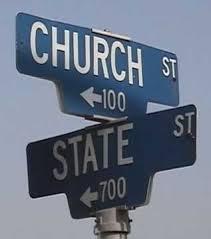
The Philippines is known to be the biggest Christian practicing country in South East Asia. We are a people known for its friendliness, hospitality and God fearing Culture. Keeping this in mind, it is safe to assume that our government no matter how much they may deny it; is heavily influenced by the churches standings and teachings. Our law makers and leaders are no different. Moreover, I feel that it is only here in the Philippines where there is little or no separation from the state and the church. I believe it is our culture that strictly binds both state and church together.

Culture is something that is dominant in the Philippines. When one talks about culture, there will always be one common answer – and that is Religion. In a society driven by culture, is there a difference between the politics of the state and politics of the church? I say yes. The state is supposed to do whatever it can to help the nation grow. Help bring food to the mouths of its people to give them a happy and prosperous life. The church on the other hand, helps the people by offering them hope and faith, giving them a sense of purpose and strength when encountering obstacles in life. The main difference is that the state uses whatever tactics it can to help sustain a nation. Whether it may or may not be moral to the church’s teachings. But being a religious country, this is where the problem lies. Is there a concrete separation between church and the state in context to the Philippine setting? The answer is no.

In a nut shell, I believe that it is only here in the Philippines where there is little if not no separation of both state and church. One example of my claim is the RHB bill. Until now the bill has not yet been passed, it is living proof that the church’s grip on the government is very real. Other examples are the absence of abortion and divorce in this country compared to the others.

Sunday, January 24, 2010

3. What happens if we don't think in human terms?


Human Concerns (even basic, down to the essentials) are neglected. This is a scary thought considering we are human. If this is disregarded there are consequences, consequences far from what we can imagine and actually not in our favor.

People now have a very “consumerist” point of view, where in everything is directed to profit or to income. From individuals to groups or organizations, we consume to for a purpose and that purpose is solely to satisfy their own needs. It is important for us to think in terms of what is human because if we don’t, the resources that these individuals and organizations that use up will be diminished in due time. There is a limit to the earth’s resources, to start it all of, it is already scarce that’s why our economists are all focused on trying to do something about the scarcity of and if we do not consider what is human, then we consume solely to earn, to satisfy a current need and therefore people would have a harder time seeing the bigger picture. These consumers will only consider what they need to achieve their goals and how/help them achieve that goal. They would neglect to see that there is more to it than achieving that goal, and that in achieving these goals there are consequences. The consumption of resources will definitely affect the next generation. Not considering the next generation is not thinking in human terms.

Regarding our resources we use them therefore we are responsible of replacing and renewing these resources or even better look for other alternatives. We humans are amazing creatures and are able to use their intellect to think of other solutions and the will to execute them. Sustainable development will help keep our resources afloat and hopefully make them last till the following generations.